Why a Robot Lawn Mower Makes Sense When You Have One Arm
A first-person guide to robot lawn mowers, one-handed lawn care, protecting your remaining arm, and the possible NDIS replacement-support pathway.
Written by: Alex Osk / One Arm Only
Perspective: Practical lived-experience guide for people using one arm or one hand.
Last updated:
Important: General information only, not medical, legal, driving assessment, prosthetic, or funding advice. For decisions about health, equipment, driving, work, or support, check with a qualified professional or the relevant authority in your area.
Quick answer
A robot lawn mower can remove the repetitive pushing, steering, turning and catcher-emptying that make ordinary mowing awkward or risky with one arm. It may help protect the arm I rely on, let me maintain the lawn on my own schedule and reduce paid mowing support. It will not suit every property, and NDIS funding is not automatic.
I have one arm. That changes the way I look at many ordinary jobs around the home.
Tasks that most people do without thinking can require planning, modified tools or help from somebody else. Lawn mowing is a good example.
A standard lawn mower is designed for a person using two hands. You are expected to hold the safety lever, steer the mower, turn it at the end of each row and keep it under control on uneven ground. With a petrol mower, you may also need to hold the machine steady while pulling the starter cord.
Then there is the grass catcher. It must be removed, carried, emptied and fitted back onto the mower.
I may be able to find a way to do some of these things with one arm, but that does not automatically make them safe, comfortable or sensible.
For me, a robot lawn mower is not simply a clever gadget. It is the type of technology that could allow a person with one arm to manage another part of everyday life without regularly depending on somebody else.
Lawn mowing is not just about strength
People sometimes assume that having one arm means you simply need to become stronger or learn to do everything differently.
That is only part of the story.
When you rely heavily on one arm, that arm has to do almost everything. It is used for cooking, cleaning, driving, carrying shopping, opening doors, using tools and hundreds of other daily tasks.
The remaining shoulder, elbow and wrist do not get much time off.
Pushing and steering a lawn mower may put even more strain on those joints. The question is not necessarily whether I can mow the lawn once. It is whether I should repeatedly place that load on my only arm every week or fortnight for years.
An injury to my remaining arm would have a much greater effect on my independence than the same injury might have on a person with two arms. Avoiding unnecessary strain matters.
A conventional mower is built for two-handed use
Most lawn mowers are not designed with one-handed users in mind.
To use one, I may need to:
- hold down a safety control while steering
- turn a heavy mower using one arm
- keep it stable on slopes or uneven ground
- lift and empty a grass catcher
- move fuel, batteries or extension cables
- clear wet grass from the mower
- load the same shoulder, elbow and wrist repeatedly
Even a self-propelled mower still needs to be controlled and turned.
There may also be a safety issue. If a mower starts moving in an unexpected direction, I have fewer options for correcting it quickly while maintaining my balance.
Hiring somebody to mow the lawn solves the physical problem, but it creates another kind of dependence. I need to arrange a suitable time, wait for the person to arrive and possibly use NDIS funding or my own money for every visit.
A robot mower offers a different solution.
What changes with a robot lawn mower
A robot lawn mower does the repetitive cutting by itself.
Once it has been correctly installed and programmed, it can operate on a schedule, move around the lawn and return to its charging station. Instead of pushing a mower for an hour, I may only need to check the machine, adjust its schedule or start it through an app.
That is a much more manageable task with one arm.
It means I can decide when the lawn is cut without waiting for a family member, gardener or support worker. The grass can be maintained regularly rather than being left until somebody is available.
That sense of control is important.
Independence is not always about doing every job manually. Sometimes it means choosing equipment that removes the need for another person. Washing machines replace hand washing. Dishwashers reduce manual cleaning. Automatic doors remove the need to pull a heavy door. A robot mower applies the same idea to lawn care.
It could protect my remaining arm
For me, one of the biggest benefits would be reducing unnecessary wear on the arm I depend on.
A robot mower removes most of the pushing, steering and turning involved in mowing. It also avoids repeatedly lifting a full grass catcher because robot mowers normally cut small amounts of grass and leave fine clippings on the lawn.
There will still be some work. A person may occasionally need to clean the mower, change its small blades or move it if it becomes stuck. Edges, weeds, branches and garden beds will still need attention.
Those occasional jobs are different from physically pushing a mower around the entire property every week. The aim is not to remove every gardening task. It is to remove the most repetitive and physically demanding part.
This is the same approach I take with other one-handed adaptive equipment: solve the task that causes repeated friction, then keep the rest of the setup as simple as possible.
It could reduce reliance on other people
There is nothing wrong with receiving help. Support workers, gardeners, friends and family members can make an enormous difference.
But most people still want to do as much as possible for themselves.
Having to ask somebody else to mow the lawn may seem like a small matter, but small dependencies add up. You need to arrange the visit, be available at the right time and rely on the person turning up. If weather delays the job, the grass continues growing. If the regular gardener is unavailable, another appointment must be organised.
With a robot mower, the routine work can continue automatically.
I would still need help with some garden maintenance, but that help could be used for work that genuinely requires another person, such as pruning, removing branches or difficult edging.
It would make little sense to pay somebody every fortnight to spend most of the visit walking behind a mower if a machine could safely do that part for years.
Could the NDIS pay for a robot lawn mower?
A robot lawn mower should not be described as automatically funded by the NDIS.
NDIS supports can include assistance with essential house or yard maintenance when the need relates to a participant's disability. However, standard household and garden products are generally everyday expenses, so a participant should not assume that a mower can simply be purchased from an existing budget.
One possible pathway may be an NDIS replacement support. A replacement support is an item or service used instead of an NDIS support already in a participant's plan. Current NDIS guidance says it must:
- replace an existing NDIS support in the plan
- help the participant the same or more than the support it replaces
- be on the approved replacement-support list
- cost the same or less than the support or supports it replaces
- receive written approval before it is purchased with NDIS funds
The list includes standard commercially available household items, but it does not specifically name robot lawn mowers. That means a participant would need to ask the NDIA whether the proposed mower can be considered in their circumstances. Approval should not be assumed.
For example, a participant who already has funded yard-maintenance hours might explain that a suitable robot mower would replace some recurring mowing visits.
The basic case would be:
- my disability prevents me from safely using a conventional mower
- my plan already pays for somebody else to mow the lawn
- a robot mower would let me manage most routine mowing independently
- it would reduce the number of paid mowing visits I need
- it would provide the same or a better result for the same or lower total cost
The decision would depend on the participant's plan, disability-related needs, property, proposed mower and the support being replaced. Buying the mower first and trying to claim it afterwards would be risky.
The long-term saving deserves consideration
The price of the mower needs to be compared with the cost of the support it could realistically replace.
The NDIS Pricing Schedule 2026-27 lists a national figure of $59.01 per hour for House or Yard Maintenance. It also lists higher remote and very remote figures. Providers and participants may agree on a lower amount, so this is not a promise of what every service will cost.
If a participant uses one hour of mowing support every fortnight, the comparison at the national figure is:
| Period | Approximate mowing-support cost |
|---|---|
| One year | $1,534.26 |
| Two years | $3,068.52 |
| Three years | $4,602.78 |
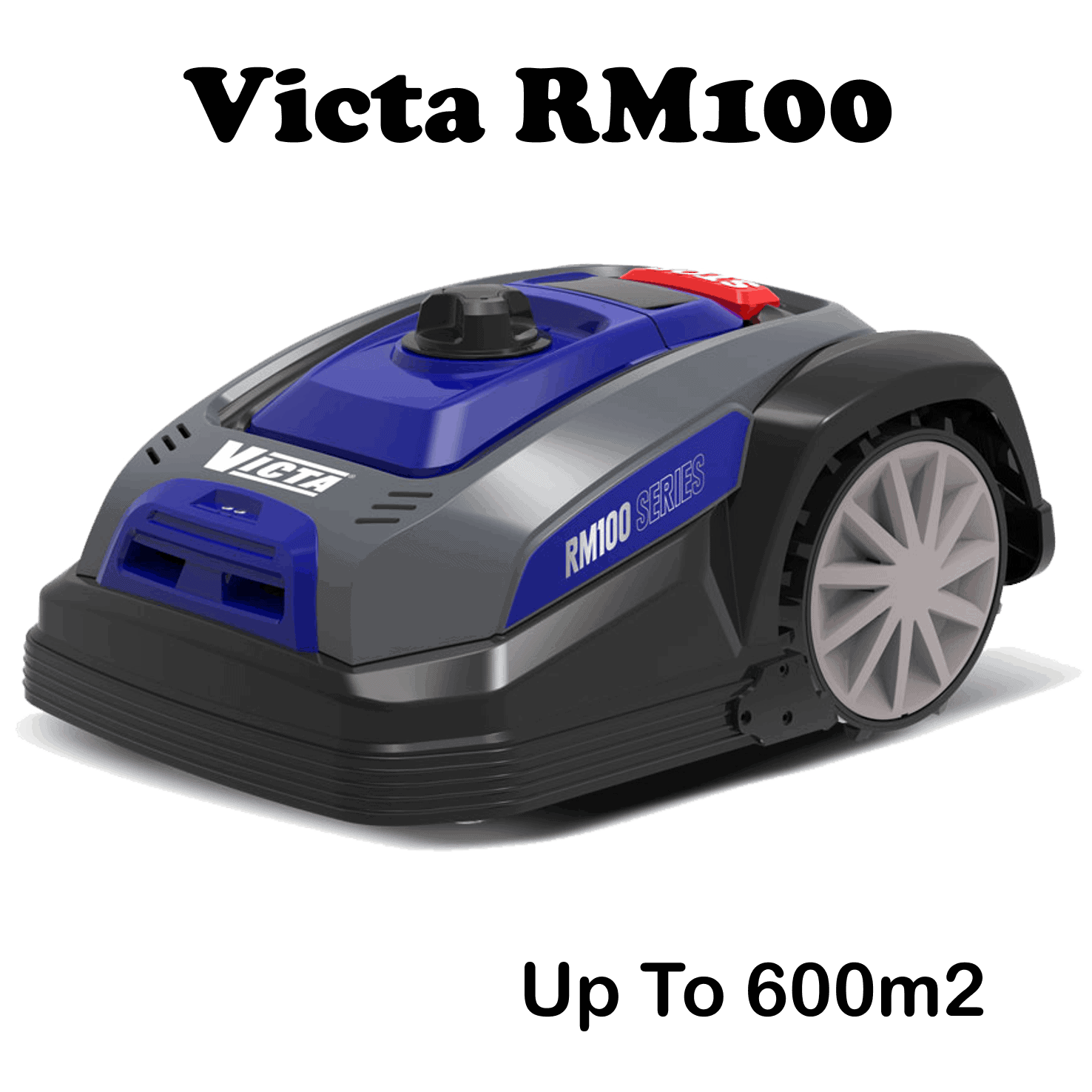
When I reviewed the Australian market on 5 August 2026, Robot Lawn Mowers Australia listed a small Victa model at $1,299 including GST. Many other models cost substantially more.
At $59.01 per hour, a $1,299 mower is roughly equal to 22 hours of yard-maintenance support. A $2,099 mower would be roughly equal to 36 hours. If a suitable mower replaced one paid hour every fortnight, the purchase price alone could be comparable with about one to two years of that support.
That does not mean the mower is free to operate. A proper comparison should include:
- installation
- replacement blades
- electricity
- repairs and servicing
- eventual battery replacement
- occasional help with edging or other garden work
It should also use a realistic expected life for the particular mower. Even with those costs, a suitable machine may represent better long-term value than paying for the same mowing task every fortnight for several years.
The strongest NDIS case is practical and measurable
Cost matters, but independence and reduced physical strain matter too.
A good replacement-support application should explain the following clearly.
Why a standard mower is not suitable
Describe the real difficulties involved, such as steering, holding the safety control, emptying the catcher, maintaining balance or protecting the remaining arm from overuse.
What support is already funded
Identify the existing yard-maintenance or mowing support that the robot would replace. A replacement support is not an extra item added on top of unrelated funding.
How much assistance would be reduced
Use a realistic estimate. The robot may replace fortnightly mowing while occasional assistance remains necessary for edging, pruning or removing branches.
Why the particular mower suits the property
Include the lawn size, slopes, narrow passages, separate mowing areas and the mower's operating limits. A quote can make the cost comparison clearer.
How the costs compare
Compare the mower, installation and expected running costs with the funded mowing support it would replace over the current plan period. The NDIS says extra assessments or reports are not required for a replacement-support application, although relevant evidence can still help explain the request.
The application should stay practical: greater independence, less load on the remaining arm, the same or a better outcome and a clear reduction in paid support.
Not every robot mower will be suitable
Robot lawn mowers vary considerably.
A mower designed for a small, flat suburban lawn may not cope with a large block, steep slopes or several disconnected lawn areas. For a person with one arm, ease of use is just as important as cutting performance.
I would check:
- whether the controls and app can be operated comfortably with one hand
- how heavy the mower is if it must be lifted
- whether it needs a perimeter wire
- whether professional installation is available
- how it handles slopes and narrow passages
- whether it can manage separate lawn areas
- how easily the emergency stop control can be reached
- whether local servicing and replacement parts are available
- how much manual cleaning and maintenance it requires
- whether it can operate safely around children, pets and wildlife
Some models use perimeter wires. Newer models may use satellite navigation, cameras or other wire-free systems. A wire-free model may be easier to install in some situations, but it is not automatically the best choice. The property, budget and reliability of local signal coverage all matter.
Professional installation may be worthwhile, particularly when setting up wires, pegs and a charging station would be difficult with one arm.
It will not do the whole garden
A robot mower is not a robot gardener.
It will not prune trees, pull weeds, collect branches or repair reticulation. It may leave grass around walls, fences and garden edges. There may still be times when I need assistance.
That does not remove its value. If the mower removes most of the regular physical work, paid assistance can be reserved for tasks that cannot reasonably be automated.
This is what practical independence looks like
People sometimes think independence means doing everything the hard way without help.
I see it differently.
For a person with one arm, independence often means finding a safer and smarter way to achieve the same result. That is one of the central lessons in my practical starting guide to one-handed living.
Using an automatic mower is not avoiding responsibility. The lawn still needs to be maintained. I am simply using technology to do repetitive physical work that would otherwise require two hands or regular paid assistance.
A suitable robot lawn mower could help me protect my remaining arm, maintain my home on my own schedule and rely less on other people for a routine task. It may also reduce NDIS spending over time if it genuinely replaces repeated mowing visits.
A robot mower will not be right for every participant or every property. NDIS approval is never guaranteed. But where a person's disability makes ordinary mowing difficult or unsafe, and where a robot can genuinely replace paid support, it deserves serious consideration.
For me, this is not about wanting a luxury garden gadget. It is about being able to look after one more part of my own home.
FAQ
Can I buy a robot mower from my NDIS budget without approval?
Do not assume you can. If the mower is being requested as a replacement support, current NDIS guidance says written approval is required before using NDIS funding to buy it.
Does the NDIS replacement-support list name robot lawn mowers?
No. The list includes standard commercially available household items, but it does not specifically name robot lawn mowers. Ask the NDIA whether the proposed item can be considered in your circumstances.
Will a robot mower remove all paid garden help?
Probably not. Edging, pruning, weeds, fallen branches, repairs and some cleaning may still require help. A realistic request should identify only the mowing support the machine is expected to replace.
What should I compare before choosing a mower?
Check lawn area, slopes, narrow passages, separate zones, installation method, mower weight, one-handed controls, servicing, safety features and ongoing maintenance. Get a property-specific recommendation or quote when possible.
Before buying
Compare robot lawn mowers by lawn coverage, slope capability, installation method and brand.
Anyone considering an NDIS-funded purchase should obtain written approval before placing an order.
Related guides
- One-handed adaptive equipment that actually helps
- Living with one arm: a practical starting guide
- Cooking one-handed: kitchen tools and strategies that save time
- Returning to work after arm amputation
This article provides general information from the perspective of a person living with one arm. It is not NDIS, legal, medical or financial advice. Funding decisions depend on each participant's circumstances, goals, existing supports and approved plan. Prices and NDIS guidance were checked on 5 August 2026 and may change.
Sources and further reading
Use these to check rules, funding, health information, or professional guidance. Local requirements can change and may depend on your situation.
Have your own method?
Share what has worked for you, or ask other one-arm users how they handle this in real life.
Visit the forum